
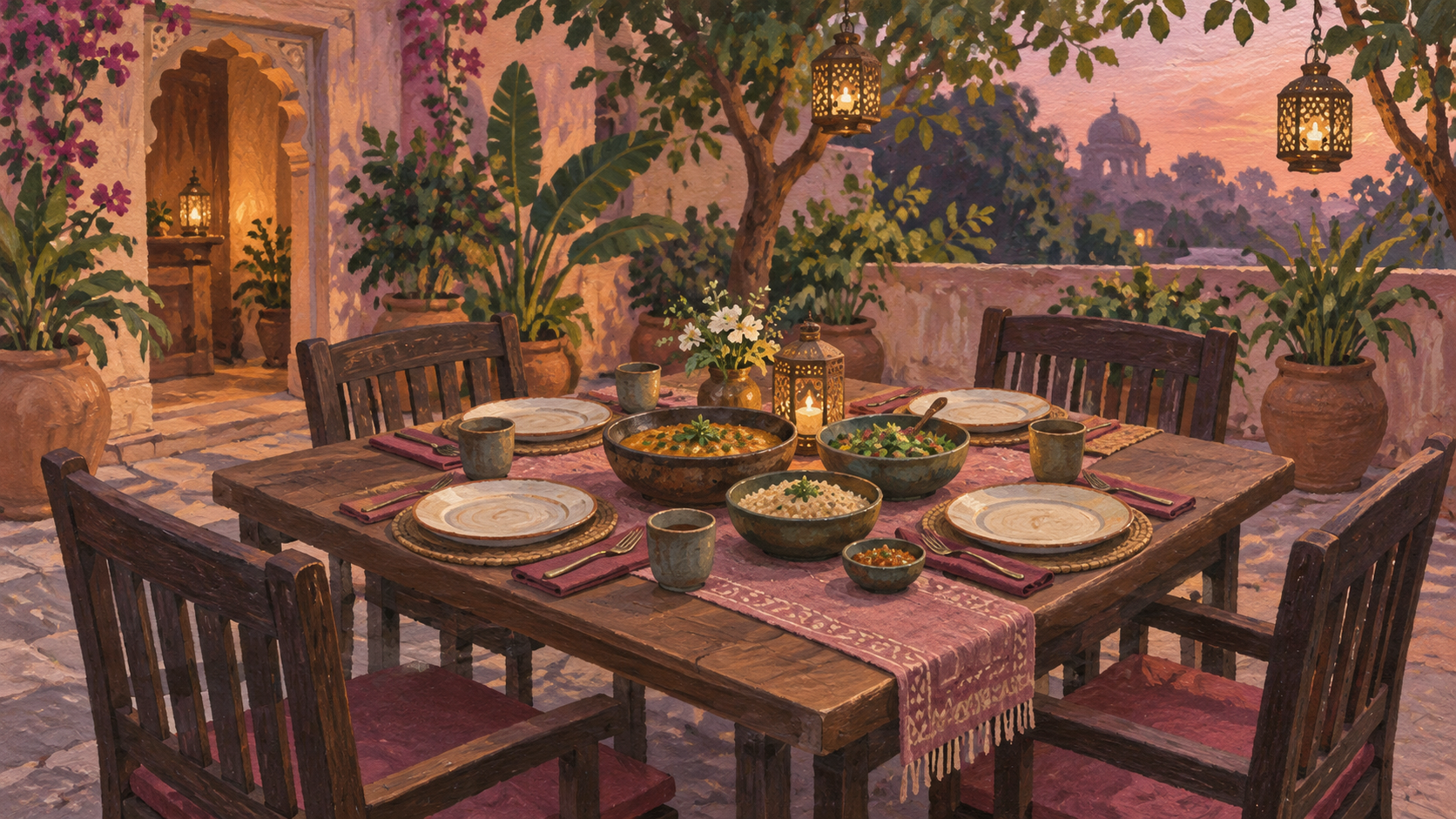
Group meals on a private India tour are easier to enjoy when friends agree the practical details before sitting down: what the trip includes, how dishes will be chosen, what each person wants to spend and how the bill will be settled. For LGBTQ+ friends and chosen companions, a thoughtful plan leaves room for different tastes without expecting anyone to speak for the whole group.
Featured artwork: an original AI-created illustration of an imagined shared dining table, not a photograph of a restaurant or a confirmed tour menu.
Agree four things: included versus optional meals; individual preferences; the actual menu and budget; shared ordering and payment. Ask the provider or restaurant to confirm the arrangements that depend on them.
Group meals on a private India tour: check inclusions
Begin with the written trip proposal. Mark which breakfasts, lunches and dinners are included and which you will choose and pay for separately. If it says “meals included”, ask what that means for each day rather than assuming every meal and drink is covered.
Distinguish a meal allowance, a set menu and a meal selected individually. Those descriptions can lead to different decisions at the table, so request the actual arrangement in your proposal. Check whether drinks or additional dishes sit outside it, without treating a sample menu as a confirmed inclusion.
Read the booking terms alongside the personalised proposal and ask about any difference between them. Keep the provider’s answer with the trip details. Confirm the meal and payment arrangements with your provider.
Ask each person what they would enjoy
Being friends does not mean liking the same food or wanting the same type of dinner. Give everyone a chance to name ordinary likes and dislikes, preferred meal formats and anything they would rather choose individually. A confident organiser should not have to guess on behalf of quieter travellers.
Keep the request specific and light: “Would you prefer a set meal or your own choice? Are there dishes you enjoy or dislike? Would you like an occasional longer dinner?” A short reply from each person is more useful than one group label that conceals several different answers.
LGBTQ+ identity does not tell anyone what you eat, how adventurous you feel or what you want to spend. Let preferences remain individual, and share only the practical information a provider needs, with the person’s agreement. There is no reason to explain anyone’s relationship or identity to justify a menu request.
This guide covers preferences and coordination rather than medical dietary needs or food-safety advice. Do not use a casual group preference list as confirmation that a kitchen can meet a specific requirement. That needs its own direct discussion with the relevant provider.
See the menu before agreeing a group format
For a proposed set meal, ask to see the menu or a clear description of the dishes and what can change. Check whether everyone must take the same option, whether individual choices are possible and when the restaurant needs the group’s decision.
Descriptions such as vegetarian or a particular style of cooking are a starting point for questions, not proof of ingredients or preparation. Ask about the actual dish rather than filling gaps from its name. If an answer is uncertain, choose a format you can understand and have confirmed.
A hypothetical group might share one starter while choosing individual main dishes. That works only if the venue offers those choices and everyone agrees to share. Another group might prefer separate orders throughout. Neither format is inherently more sociable; the useful choice is the one your party and the venue can actually support.
Tailor a private LGBTQ+ India itinerary around the meals you would particularly enjoy, while marking the rest as open decisions. A request for a certain format is a planning preference until the relevant arrangements are confirmed.
Choose a budget before choosing shared dishes
Talk about a comfortable spending range privately within the group before selecting a restaurant or accepting a special dinner proposal. Make clear whether that range refers to food alone or the total each person is willing to pay. Do not assume that agreeing to travel together means agreeing to every optional meal expense.
Then compare the proposed menu with that agreed range, using the restaurant’s current information. Check what is included and what might be ordered separately. If an optional dinner does not suit someone’s budget, discuss another arrangement without asking them to justify their finances to the whole table.
Choose how shared dishes will be authorised. For example, agree that whoever suggests an extra dish first checks that the people sharing it want it and understand the cost. This small habit avoids one person ordering for everyone while the others discover the expense at payment.
Confirm payment before the first order
Ask the restaurant whether separate bills are possible and which payment methods it accepts before ordering. A group’s preference for individual payments does not guarantee that the venue can provide them. If separate bills are unavailable, decide whether one person will settle the total and how the others will reimburse their shares.
Be equally clear about a single bill. Will each person cover their own dishes, will shared items be divided among those who chose them, or has everyone agreed another method? Avoid declaring an equal split only when the bill arrives, especially if the orders differed substantially.
A simple hypothetical arrangement is to divide an agreed shared starter among the people eating it, while each person covers their own main dish and drink. This illustrates a group decision, not a rule used by Indian restaurants. Confirm the practical payment method with the actual venue and keep any group record minimal.
Fit meals into the day without crowding it
When planning time in Delhi, identify whether lunch is a fixed booking or a decision to make during the day. That tells the planner what needs organising and helps the group distinguish a meal commitment from a suggestion.
The same question matters during a private Jaipur visit. If a particular shared dinner is important, mention it while discussing the day’s structure. Ask how it fits with the proposed transport and visits instead of treating it as an extra activity that needs no time of its own.
Not everyone needs to attend every optional dinner. Agree participation before confirming numbers, then check what a later change would mean with the provider. For the wider balance between shared plans and independence, the guide to making room for personal time covers that discussion in more detail.
Send one clear meal note to the planner
Once the friends have discussed their preferences, summarise the agreed requests instead of forwarding a long chat. Identify any meal you want arranged, the expected participants, the preferred format and the questions still awaiting a reply. Keep tentative ideas visibly separate from confirmed bookings.
Which meals are included in the proposed tour, and what does each include?
For an arranged dinner, can we see the current menu and possible choices?
What must we decide in advance, and who confirms it with the venue?
What happens if the participant count or an individual choice changes?
For meals you organise independently, make the same checks directly. A private itinerary gives you a way to discuss preferences; it does not replace a restaurant’s confirmation of a table, menu or payment arrangement.
Frequently asked questions
Are all meals included in a private India tour?
Use your written proposal to establish exactly which meals are included. Ask about each day, the meal format and any separately charged drinks or dishes. Private travel does not automatically mean every meal is covered, so resolve broad wording before comparing proposals or agreeing optional restaurant bookings.
Can friends choose different meals?
Ask the actual restaurant or meal provider which individual choices are available. A set group menu may offer different options from separate ordering, and requested changes need confirmation. Let each friend express their preference rather than assuming one organiser’s choice represents everybody at the table.
How should we handle different meal budgets?
Agree a comfortable range and what it covers before selecting optional meals. Make participation a choice, and check the current proposal against that range. A friend should be able to decline an extra dinner or dish without explaining personal finances to the wider group or feeling obliged to match another traveller’s spending.
Can we ask restaurants for separate bills?
You can ask, but confirm that the venue can provide them before ordering. Also check accepted payment methods. If the arrangement is unavailable, agree another method among the group before the meal, including who pays the total and how shared dishes and individual orders will be divided.
Does everyone have to join each group dinner?
Decide participation while planning and check the terms of any confirmed meal booking. An optional dinner can remain optional without making someone responsible for the whole group’s plans. Tell the relevant provider about the agreed numbers and ask what changes are possible before assuming a place can be cancelled.
Plan meals that suit the people travelling
Clear inclusions, individual choice and an agreed payment method leave more attention for the meal itself. Discuss your friends’ India trip with your proposed route and the shared meals you would like to arrange. Keep the requests practical, optional and specific to the people joining you.
Leave a reply +