
Plan free time on a private India tour as a deliberate part of the itinerary: decide what you want the time for, whether any transport or guiding is needed, and where the next organised part begins. A blank afternoon does not, by itself, tell you whether a driver is waiting or whether you are making your own way back.
For LGBTQ+ couples, friends and solo travellers, there is no single ideal balance of company and independence. You might want a guided introduction followed by time to read, browse, eat or simply be together. The useful question is how that preference translates into a workable day, with clear support arrangements and enough room to change your mind within the agreed terms.
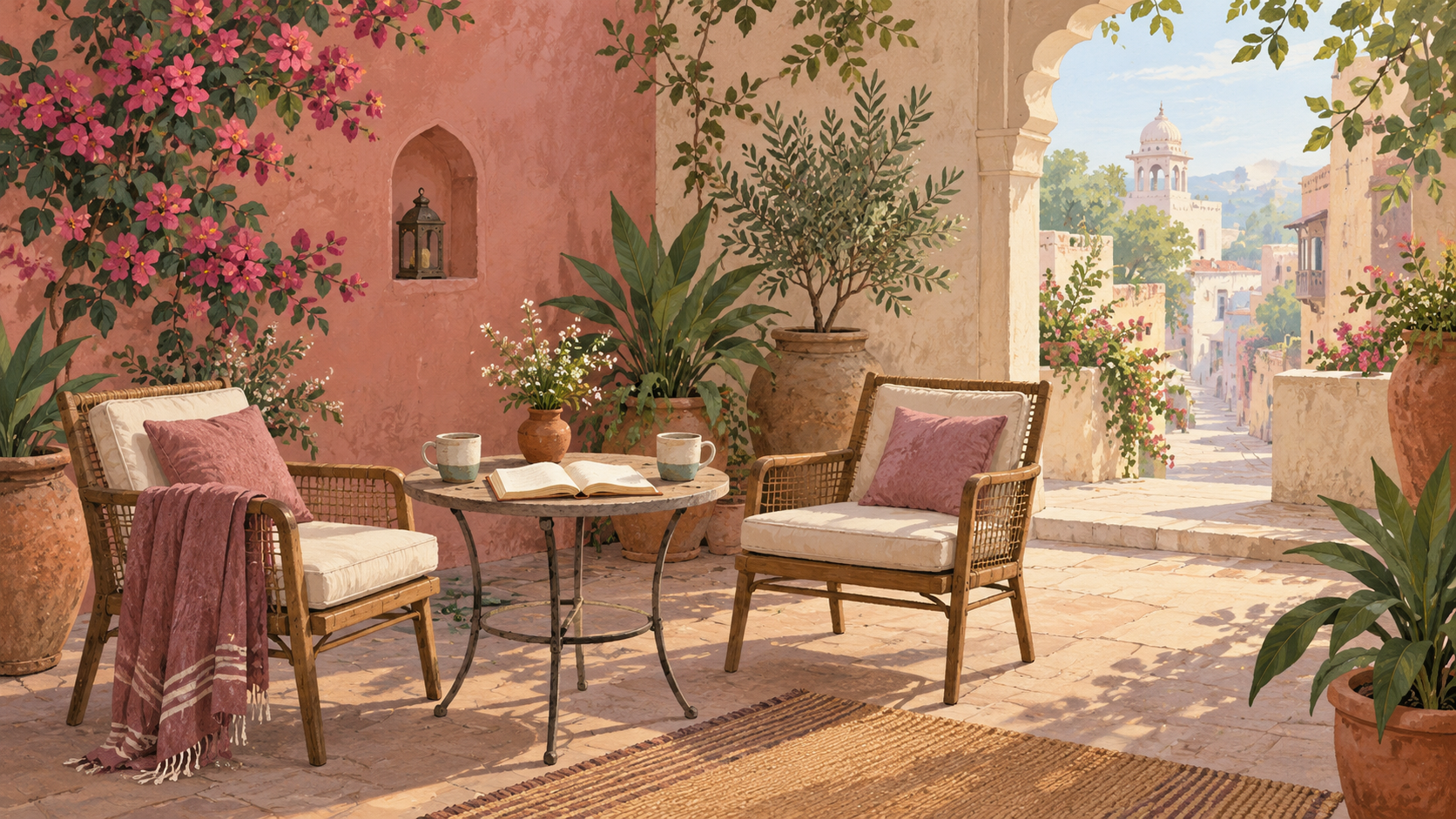
Featured artwork: an original AI-created editorial illustration of an imagined courtyard for unhurried personal time. It is not a photograph of a bookable hotel or a real traveller's experience.
Quick planning guide: Give personal time a start, a finish and a place. Specify whether it is unaccompanied time, time without a guide but with agreed transport, or an unallocated block to decide later. Confirm the return arrangement and the contact to use if plans change.
Define free time on a private India tour
The words “at leisure” are useful only when everyone understands them. Three simple planning labels can help you describe what you mean. They are suggestions for your conversation with the planner, not standard service categories or promises about what a tour includes.
Unaccompanied time
You make your own choices during this block and do not expect a guide to accompany you. Confirm whether you will remain at the hotel, go out independently or need a separately agreed journey. Personal time can be as modest as a quiet lunch; it need not become another ambitious sightseeing programme.
Time without a guide, with agreed transport
You may want to explore a chosen place at your own pace while retaining a planned pickup afterwards. That requires agreement about the vehicle's role, the meeting point and the service window. It does not mean the driver is automatically available for unlimited changes or will wait wherever you decide to stop.
Unallocated time
You may prefer to keep a block undecided until you know how you feel. Ask which decisions can reasonably wait and which services need advance arrangements. An unallocated afternoon and a fully flexible, staffed afternoon are different requests, even if both look empty on the printed itinerary.
Gay Tours India's custom planning page discusses the balance of guided time, interests and time alone. Use it to shape a private itinerary around your preferred rhythm, then have the actual support and inclusions written into your proposal.
Protect the time you want to keep
Start with the purpose of the break. “An afternoon to rest at the hotel” communicates something different from “an afternoon to browse independently, with a pickup afterwards”. You do not have to turn rest into an activity to justify including it. A block can remain valuable even if you spend it reading or doing very little.
Next, check what surrounds it. If a guided visit ends away from your accommodation, the transfer and meal arrangements affect how much personal time remains. Similarly, a quiet morning followed by checkout may need somewhere agreed for luggage. Mark those transitions on the itinerary rather than silently counting them as free time.
Choose a small number of protected blocks before filling the rest of the trip. Then read the plan as a sequence of experiences: a guided morning, a journey, lunch, an independent afternoon and the next meeting. If the supposed break disappears once those elements are included, ask which scheduled activity can be moved or removed, subject to availability and the booking terms.
For destination context, the site's Delhi travel planning and Jaipur sightseeing and pacing ideas can help you decide where you want explanation and where you prefer less structure. They do not establish that every proposed independent activity will suit your particular date or requirements.
Agree the vehicle's role and the return
The simplest useful question is: “When this guided part ends, what happens to the driver, the guide and us?” Ask it for each substantial free-time block. A guide may finish while a later transfer remains arranged, or the day's booked transport may finish when you reach the hotel. Check the proposal rather than inferring either arrangement from “private tour”.
Record the details you would need without reopening a long email exchange:
Start: where the organised activity ends and how you reach your chosen place.
Finish: the agreed meeting time and a recognisable, permitted pickup point.
Transport: what is booked, any waiting arrangement and any separate cost to confirm.
Contact: which person or channel handles an altered pickup or a missed meeting.
Fallback: what to do if you cannot use the usual contact method.
Next commitment: the visit, meal or transfer that limits how much the block can move.
Use a specific meeting place rather than the name of a large district. Ask the planner to confirm that pickup is workable there. If you decide to leave your chosen area, check how that affects the agreed return before assuming someone can collect you at a new location.
Keep the arrangement available in a form you can consult while travelling. Agree the method with the team; do not assume a particular app, signal or instant response will always be available. This is ordinary coordination, and it helps protect the personal time you have made room for.
Make room for different interests without overexplaining
Travelling together does not require identical plans for every hour. One person may enjoy a detailed cultural visit while another prefers a quiet afternoon. Begin by describing the practical split: who would like which activity, whether either needs transport, and where you want to reconnect. Treat separate plans as an itinerary question, without making assumptions about anyone's identity or relationship.
A shared vehicle can make a split more complicated than it looks. Ask whether the proposed journeys can work with the booked transport or need another arrangement. Do not assume that one vehicle can provide separate pickups at the same time. Each traveller should know which part of the plan applies to them.
You can choose how much personal context to share. A request such as “we would like some time on our own after lunch” may communicate the planning preference adequately. If more information is operationally necessary, ask what is needed and agree what may be passed to a supplier. There is no need to invent a reason for wanting a quieter pace.
When personal time includes meeting people or visiting a community space, follow the same respect for consent as during organised activities. The brand's responsible travel and consent guidance provides context. An open block in a programme does not create access to people, events or private spaces.
Three possible day shapes to discuss
These are illustrative patterns, not included packages or confirmed schedules. The route, accommodation, actual services and current visiting arrangements determine what can be offered. Use the patterns to show your preference, then let the written proposal settle the practical detail.
A guided morning followed by hotel time
Choose one main guided experience, agree the return to your accommodation and leave the rest of the afternoon open. Confirm when transport and guide services end. If you might go out for dinner, discuss that separately rather than assuming an evening journey is included because the afternoon is free.
A planned visit followed by independent browsing
Ask for the guided part to finish somewhere compatible with your next activity, with a specific later pickup if required. Check the transition, meeting point and contact arrangement. Keep the independent plan modest enough that it does not depend on several unconfirmed visits fitting into the gap.
A shared start with separate afternoon plans
Begin together, then allow one traveller to rest while another follows an agreed interest. Check each person's transport and the point at which the party comes together again. A simple reunion at the accommodation may suit you better than trying to synchronise multiple moving pickups.
If you are considering the sample six-day Golden Triangle route, use these patterns to ask where personal time could fit. A sample provides a starting structure; it does not confirm that changes, extra transfers or services are automatically available within the same price.
Review what is agreed before the journey
Read the final itinerary for places where “free”, “optional” or “flexible” still hides an unanswered question. Identify the support you are retaining, the parts you will arrange yourself and any decisions left open. Confirm how requested changes will be handled under your trip's written terms. Fewer guided hours do not automatically imply a refund or saving.
The broader LGBTQ+ India planning guide can support the rest of your preparation. For the daily schedule, keep the request practical: the experience you want, the time you want to protect and the arrangements that make it usable.
Discuss your preferred balance of guided and personal time before the route is finalised, so the proposal can account for it from the start.
Common questions about personal time
How much free time should a private India tour include?
Include enough to support your preferred pace rather than following a fixed daily allowance. Identify where you want to rest, explore independently or spend time together, then account for meals and transfers around those blocks. Ask the planner to test the whole day. The useful amount depends on the itinerary and your interests, not on a universal rule.
Will the driver or guide still be available during free time?
Only the agreed proposal can establish that. Confirm each person's role, the service period, any waiting arrangement and whether a later pickup is booked. A private tour does not automatically mean unlimited standby or evening transport. If you want support during an otherwise unstructured block, request it explicitly and check the terms and cost.
Can two travellers choose different afternoon activities?
You can request separate plans, subject to workable transport and available services. Explain the practical split and decide where to meet again. Check whether the booked vehicle can support both plans or whether another arrangement is needed. Different interests do not require a lengthy personal explanation; the planner needs enough information to coordinate the day.
How should we arrange a pickup after independent time?
Agree a specific meeting point, time, contact method and fallback with the team before the block begins. Confirm that the pickup location is workable and what to do if you are delayed. If you change your location, check the new arrangement rather than assuming the original booking covers an open-ended collection from anywhere.
Do we need to explain why we want time alone?
You can state the practical preference without volunteering personal details. Explain when you want the block, what support you need and where the next organised part should start. If additional information is requested, ask why it is needed and agree what may be shared. Choose the amount of personal context you feel comfortable providing.
Can an afternoon stay completely free for rest?
Yes, you can ask for a rest block with no organised activity. Confirm where you will spend it, any accommodation or transfer arrangements and when booked services end. Protect it in the itinerary rather than allowing optional suggestions to become assumed commitments. Rest remains a valid choice even when there are other things you could visit.
Leave space that you can actually use
A well-planned gap has just enough structure to make it yours: clear service boundaries, a workable return and no pressure to fill every minute. Share the rhythm you would like for your private India journey, including any time you want to keep unallocated, and ask for those choices to be reflected in the written plan.
Leave a reply +